
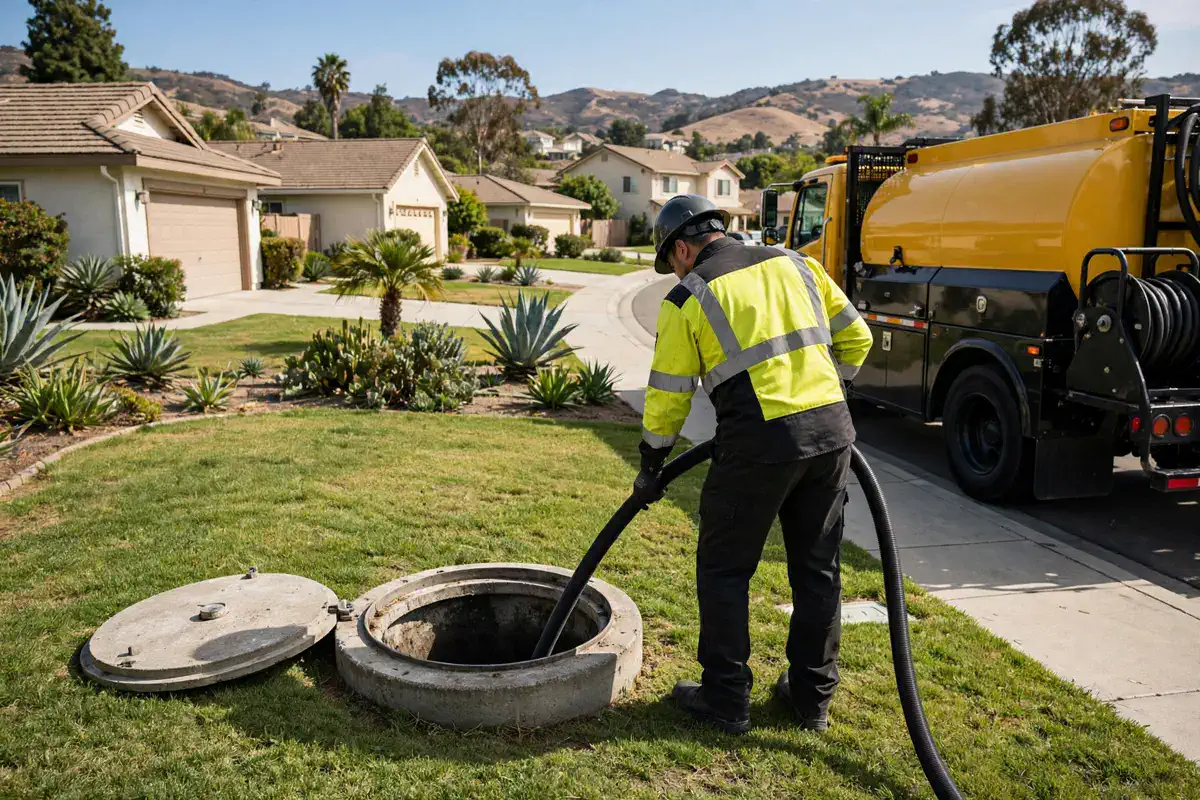
Septic Tank Pumping
in Ventura County
Regular septic tank pumping is the simplest way to protect your home, your yard, and your drain field. Busy Bee Septic Tank Pumping removes sludge and scum before they cause backups, odors, and expensive damage — on your schedule, from our Camarillo base, day and night.
Request a Free Estimate
Get a fast response for your Septic Tank Pumping
Why Ventura County Calls Busy Bee for Septic Tank Pumping
We are a Camarillo-based septic company, not a call center or a directory. When you call, you reach the team that will actually pump your tank — on time, with clean equipment, and with a straight answer about what your system needs.
Open 24 Hours
Septic problems do not wait for business hours, and neither do we. Call any time, day or night, and we will schedule your pump-out or send help for an urgent backup.
Full Pump-Out, Not a Quick Skim
We remove the sludge layer from the bottom and the scum layer from the top, then check the baffles and the effluent filter, so the tank is genuinely empty when we leave.
Local to Ventura County
Our trucks run from 465 Carmen Dr Ste C in Camarillo to homes across Ventura, Oxnard, Thousand Oaks, Simi Valley, Moorpark, Santa Paula, and Fillmore every day.
Straight Answers, Free Estimate
Before we start, we explain what the job includes and what affects the cost — tank size, access, and condition — so there are no surprises when the work is done.
What a Professional Septic Tank Pump-Out Includes
A septic tank is a settling chamber. Everything that goes down your drains separates inside it: heavy solids sink to the bottom and form a sludge layer, grease and lighter material float to the top and form a scum layer, and the clarified liquid in the middle — the effluent — flows out to your drain field. Pumping removes the sludge and the scum so the tank has room to do its job. When those layers get too thick, solids escape into the drain field, where they clog the soil and the leach lines. That is how a routine maintenance job turns into a drain field failure, and it is why regular pumping is the cheapest septic service you will ever buy.
A proper pump-out starts with access. Our technician locates the tank, opens the riser lids or the access ports, and measures the sludge and scum layers before pumping begins. Those measurements tell us how full the tank really was and whether your pumping schedule needs to change. Then we pump the tank completely — all compartments, not just the first one — using a vacuum truck with enough capacity for residential tanks of every common size. While the tank is empty, we check the inlet and outlet baffles that keep solids out of the drain field, and we inspect and clean the effluent filter that protects the leach lines from floating debris. If a baffle is cracked or a filter is clogged, we tell you on the spot and explain your options.
How often your tank needs pumping depends on two things: the size of the tank and the size of your household. A 1,000-gallon tank serving a family of four typically needs pumping every three to five years, while a larger household or a smaller tank shortens that interval. Garbage disposals, heavy laundry loads, and extra guests all add solids faster. The only reliable way to set your schedule is to measure the layers at each visit and adjust from there, which is exactly what we do. Waiting until drains slow down or odors appear means the tank was already overdue.
There are clear signs that a pump-out is due. Drains run slow throughout the house, not just in one sink. Toilets gurgle or flush weakly. You notice sewage odors near the tank, the drain field, or inside the home. The grass over the drain field looks unusually green and lush, or the ground feels soggy when it has not rained. In the worst case, sewage backs up into a bathtub or a floor drain. Any of these signs means you should call right away. A tank that is overdue can push solids into the leach lines, and once the soil absorption area is clogged, pumping alone will not fix it.
What you flush matters as much as how often you pump. Septic-safe toilet paper breaks down quickly in the tank, and standard household toilet paper used in normal amounts is fine. What is not fine: wipes of any kind, even those labeled flushable, feminine hygiene products, paper towels, cotton swabs, dental floss, cigarette butts, and cooking grease. Grease hardens in the tank and adds to the scum layer, while wipes and other non-degradable items do not break down at all — they accumulate, clog the effluent filter, and can jam the baffles. The cost of pumping is driven by tank size, access, and condition: a larger tank takes longer, a buried tank without surface risers must be located and uncovered first, and a tank that has gone far too long between pump-outs may hold hardened sludge. When you call for a free estimate, we ask about your tank size, your household, and your last pump-out date so the estimate reflects your actual situation. A septic tank can last for decades when it is pumped on schedule and the drain field is protected — and if you are buying a home with a septic system, or facing a system you cannot afford to replace right now, a pump-out and inspection is the right first step.
- Locate the tank and open the riser lids or access ports
- Measure sludge and scum layers before pumping begins
- Pump all compartments completely, sludge and scum included
- Inspect inlet and outlet baffles for cracks or damage
- Clean the effluent filter so it protects the drain field
- Check the drain field area for wet spots, odors, or surfacing effluent
- Report the tank condition and recommend your next pump-out date
Waiting vs. Pumping on Schedule
Putting off a pump-out never makes the problem smaller. Here is what changes when you stay on schedule with Busy Bee.
| Service Aspect | Waiting or DIY | Busy Bee Septic |
|---|---|---|
| Drain field health | Solids escape into the leach lines and clog the soil, shortening the life of the whole system. | ✓ Sludge and scum are removed before they reach the drain field, protecting the soil absorption area. |
| Backups and odors | Slow drains, gurgling toilets, and sewage odors build up until a backup forces an emergency call. | ✓ Drains stay fast and the house stays odor-free, because the tank has room to work. |
| What gets checked | Nothing is inspected until something breaks, so cracked baffles and clogged filters go unnoticed. | ✓ Every pump-out includes a baffle and effluent filter check, with problems reported on the spot. |
| Scheduling | You call in a crisis and wait for the first available truck, often at the worst possible time. | ✓ You pick a date that suits you, with 24-hour availability and a reminder when your next pump-out is due. |
| Long-term cost | A neglected tank can lead to drain field repair or full system replacement. | ✓ Routine pumping is the lowest-cost way to keep the whole system running for decades. |
How Septic Tank Pumping Works With Us
Four simple steps, from your first call to a clean, empty tank.
Call or Request a Quote
Call (805) 307-3409 or send a quote request. Tell us your tank size if you know it, your household size, and when the tank was last pumped.
Get a Free Estimate
We explain what the pump-out includes and what affects the cost for your property — tank size, access, and condition — before any work begins.
On-Time Service
Our truck arrives on schedule, locates the tank, pumps every compartment, and checks the baffles and effluent filter while the tank is open.
Done Right
We leave the site clean, report the tank condition, and note the date for your next pump-out so your system stays protected.
Is Your Septic Tank Due for Pumping?
If it has been more than a few years since your last pump-out — or if drains are slow, toilets gurgle, or odors are showing up — call Busy Bee Septic Tank Pumping today. We serve all of Ventura County, open 24 hours, and every quote is free.
Request Your Free EstimateFrequently Asked Questions
Find immediate answers about this septic service in Camarillo and Ventura County.
Can you sell a house with a non-compliant septic tank? +
Can I flush toilet paper with a septic tank? +
What is the average lifespan of a septic tank? +
What if I cannot afford a new septic system? +
How often should a septic tank be pumped? +
How long does a septic tank pump-out take? +
Busy Bee Septic Tank Pumping
Areas We Serve in Ventura County
From our Camarillo base at 465 Carmen Dr Ste C, we serve homes and businesses across Ventura County, including Camarillo, Ventura, Oxnard, Thousand Oaks, Simi Valley, Moorpark, Santa Paula, and Fillmore — day and night, seven days a week.