
Septic Tank Pumping in
Fillmore, CA
Fillmore's downtown homes, Bardsdale ranches, and Sespe Creek properties run on septic — and many of those systems have been working quietly for decades. Busy Bee pumps, inspects, and repairs them, from Rancho Sespe to Fillmore Heights, day or night.
Request a Free Estimate
Get a fast response for your Septic Tank Pumping in Fillmore
Why Fillmore Calls Busy Bee for Septic Pumping
Fillmore is a small agricultural town where septic is the norm, not the exception. Our crews know the valley's soils, the floodplain, and the older systems that keep this town running.
Straight Down Highway 126
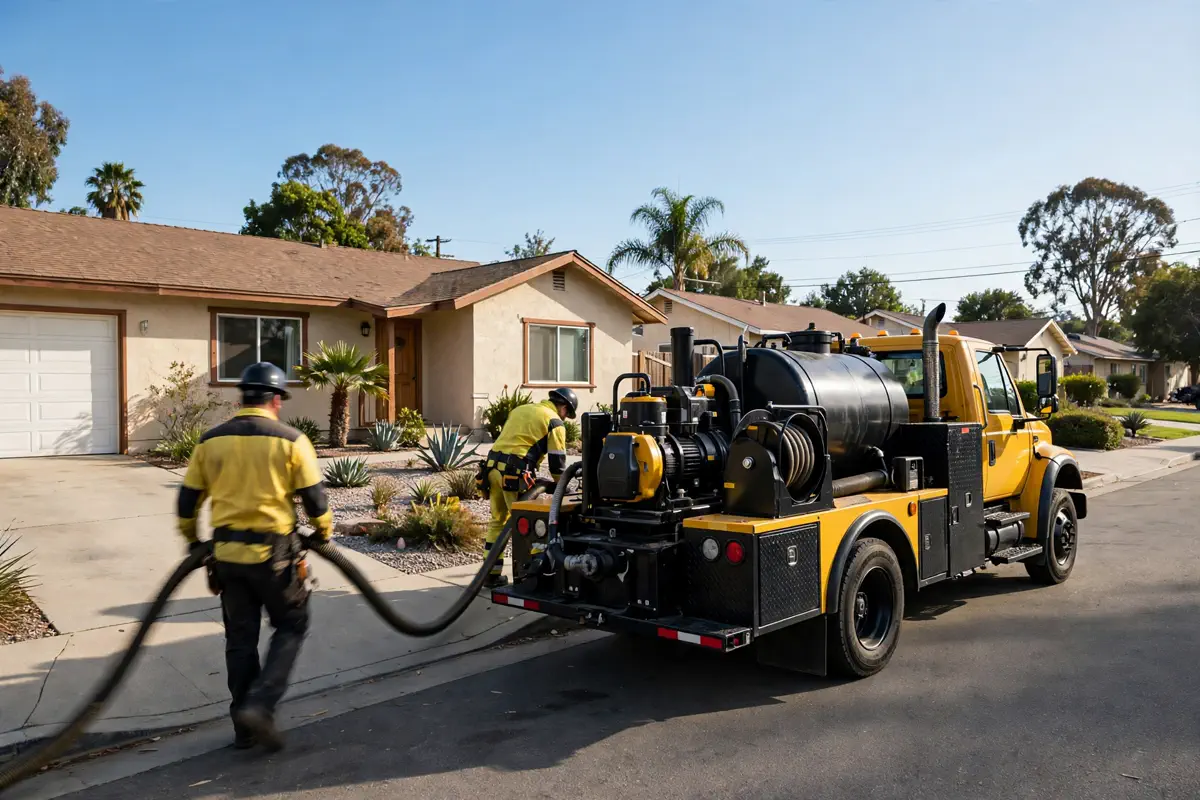
Our Camarillo base reaches Fillmore fast on Highway 126, through Santa Paula and into the Sespe Creek valley. Same-day pump-outs are the norm, and emergency calls get a truck, not a callback.
Full Pump-Out & Inspection
Every visit empties all sludge and scum, checks the baffles and effluent filter, and inspects the leach field or seepage pit. You get a written report on the whole system, not just a pumped tank.
Home Sales & Inspections
We locate systems with no records, inspect tanks for buyers and sellers, and provide the written findings escrow and the county ask for. Fillmore homes change hands with old septic systems — we make sure both sides know what they are buying.
24-Hour Emergency Service
Backups, overflows, and alarms do not wait for morning. Our line is answered around the clock, and our trucks roll nights, weekends, and holidays across Fillmore.
Septic Tank Pumping in Fillmore — How Your System Works, and How to Keep It Working
Fillmore sits where the Sespe Creek valley meets the Santa Clara River, a town of downtown homes, citrus groves, and ranch properties that have run on septic for generations. In Downtown Fillmore, Bardsdale, Rancho Sespe, and Fillmore Heights, private septic systems are the standard — and they are built to last, as long as someone pumps them on schedule. A septic tank is a simple machine, and understanding how it works is the best way to keep it from failing.
A septic tank has one job: separate solids from liquid. Wastewater from the house flows into the tank, where the heavy solids sink to the bottom as sludge and the lighter grease and soap float to the top as scum. The liquid in the middle — the effluent — flows out through the outlet baffle into the leach field or seepage pit, where the soil filters it. The tank itself does not treat the wastewater; it holds it long enough for the solids to settle out. That is why pumping matters: when the sludge layer gets too thick, solids escape through the outlet and clog the soil in the leach field. Once the soil clogs, the field stops absorbing, effluent surfaces in the yard, and the whole system backs up.
Most Fillmore homes need pumping every 3 to 5 years. A 1,000-gallon tank serving a family of four sits right in the middle of that range. Larger households, heavy laundry use, and garbage disposals shorten the interval, and homes with seepage pits should stay on the shorter end, because a pit that clogs is harder to restore than a leach field. The best time of year to pump is before the rainy season, when the ground is dry and the crew can work easily — but any time is better than waiting for a backup. A tank that has not been pumped in years is not saving money; it is borrowing against the leach field.
The leach field — also called the drain field — is where the real treatment happens. Effluent flows from the tank through the distribution box into a network of perforated pipes buried in gravel trenches, and the soil below filters out bacteria and nutrients. In Fillmore, leach fields sit on valley soils that drain well when they are healthy, but they have an enemy: solids. Every gallon of sludge that escapes the tank coats the soil with a slimy layer called biomat, and biomat is what eventually seals a field shut. Seepage pits work the same way on a smaller footprint: a deep, lined hole lets effluent soak into the ground below, and once the pit walls clog, the tank backs up fast. Regular pumping is the only thing that keeps solids out of both.
Fillmore's Sespe Creek floodplain adds a risk that most Ventura County towns do not have. When the creek rises and the ground saturates, a leach field that is already struggling can stop absorbing entirely, and a tank that is full can push effluent to the surface. Homes near Sespe Creek and in the lower parts of the valley should pump before the rainy season and keep an eye on the yard after heavy storms. Standing water over the leach field after a storm is a warning sign, not a coincidence — and a backup during a storm is a septic emergency, because the saturated ground has nowhere for the effluent to go.
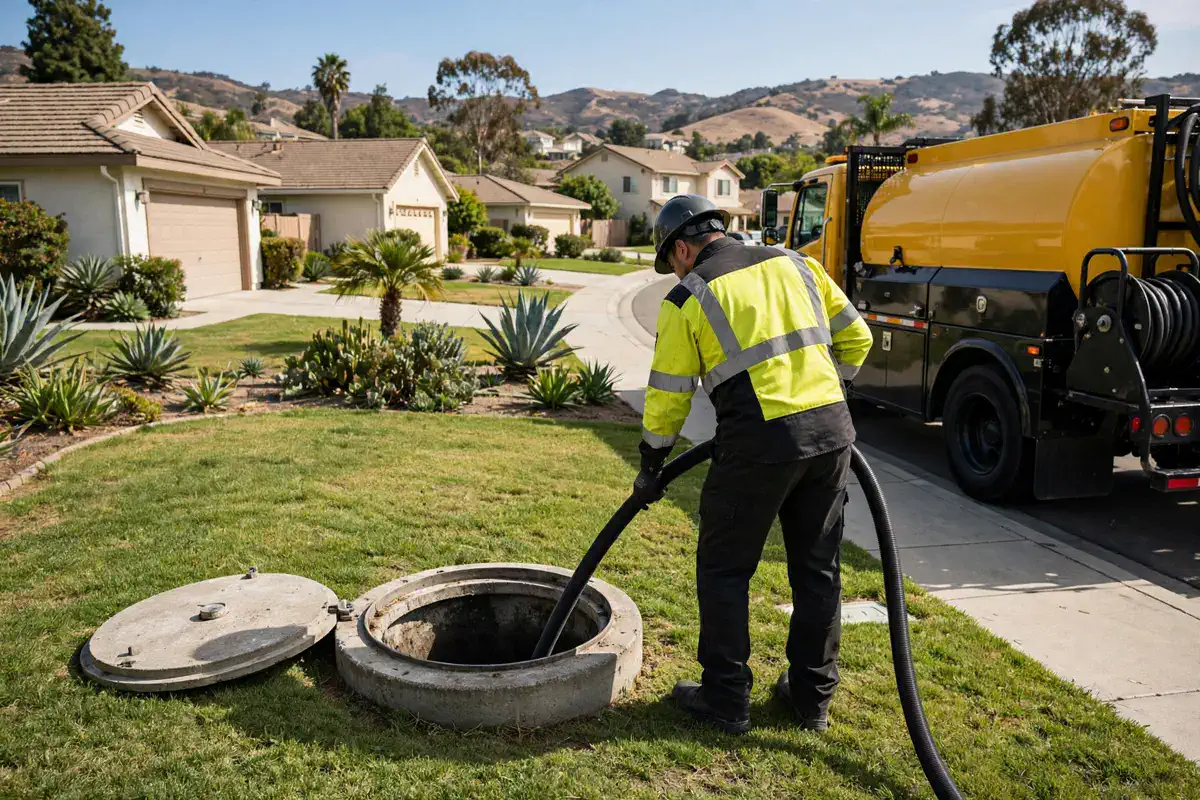
A pump-out visit follows the same steps every time. First, we locate the tank and its lids. On older Fillmore properties, the records are often gone, and the lids may be buried under a foot of soil or a patio. We find the tank with a probe and a locator, dig out the lids, and open them. Second, we pump out all the sludge and scum — not just the liquid — and wash down the tank walls. Third, we inspect the inlet and outlet baffles, the effluent filter, and the tank walls for cracks. Fourth, we check the leach field or seepage pit for signs of trouble: soggy ground, odors, or surfacing effluent. If the lids were buried, we can install risers — short extensions that bring the lids up to ground level — so the next pump-out takes minutes instead of hours of digging.
Cleaning and pumping are not the same job, and Fillmore homeowners hear both terms. Pumping removes the sludge and scum from the tank. Cleaning goes further: washing the tank walls, clearing the baffles, cleaning the effluent filter, and jetting the lines between the tank and the field. A tank that has gone too long between pump-outs usually needs both. Hydro jetting — high-pressure water that scours the inside of a pipe — clears grease and roots from the lines feeding the leach field. Snaking clears a blockage in a single drain line, but it does not clean the pipe walls, and it does nothing for a clogged leach field. When a line is slow, the right tool depends on where the blockage is, and we diagnose that before we start.
Sewer backups in Fillmore have a few common causes. A full tank is the most common — solids block the outlet and wastewater has nowhere to go but back into the house. A clogged effluent filter does the same thing on a smaller scale. Tree roots in the line between the house and the tank, a broken pipe, or a failed effluent pump can all cause a backup too. And during heavy rain, a saturated leach field in the floodplain can push effluent back toward the house. If sewage is backing up, stop running water, keep people and pets away from the affected area, and call us. Do not keep flushing to see if it clears — it will not, and every flush adds to the mess.
Can you pump a septic tank yourself? No. Pumping a septic tank requires a vacuum truck, a place to dispose of the waste legally, and the knowledge to inspect the system while it is open. A homeowner with a rented pump cannot empty the sludge from the bottom, cannot dispose of septage legally, and cannot see a cracked baffle or a failing leach field. The county regulates septage disposal, and dumping it on the ground or down a drain is illegal and a health hazard. This is one job that belongs to a professional pumping company with the right truck and the right disposal permits.
If you are buying or selling a home in Fillmore, the septic system is part of the deal. A large share of Fillmore homes have systems that predate current standards, and a system that looks fine on the surface can hide a full tank, a cracked baffle, or a failing leach field. We locate systems with no records, pump and inspect the tank, and provide a written report on the tank, the baffles, the filter, and the disposal field — the findings a buyer's inspector and the county want to see. A clean report with a fresh pump-out gives the buyer confidence and the seller a stronger position.
Fillmore is also home to RVs, horse properties, and small businesses that need more than a standard residential pump-out. We pump RV holding tanks, replace failed effluent pumps, and service the grease traps of the restaurants and markets along the Highway 126 corridor. A failed pump stops the whole system — the tank fills, the alarm sounds, and wastewater has nowhere to go — so we carry replacement pumps and floats and aim to get the system running again on the same visit.
Getting to Fillmore from our Camarillo base is a straight run east on Highway 126, through Santa Paula and into the Sespe Creek valley. That puts us in Downtown Fillmore, Bardsdale, Rancho Sespe, and Fillmore Heights in about the time it takes to cross town — which is why same-day service is the norm here, and why a midnight emergency gets a truck instead of a callback in the morning.
- Slow drains or gurgling toilets in several fixtures at once
- Sewage odors inside the home or over the yard and leach field
- Standing water, soggy ground, or bright green grass over the leach field
- Toilets backing up after laundry, showers, or heavy water use
- A septic alarm sounding, or a tank that has not been pumped in 3 to 5 years
- Surfacing effluent in the yard after heavy rain, especially near Sespe Creek
Waiting vs. Pumping on Schedule in Fillmore
Fillmore systems work hard in valley soil and floodplain ground. Here is what waiting costs — and what a scheduled visit delivers.
| Service Aspect | Waiting or DIY | Busy Bee Septic |
|---|---|---|
| What gets removed | Liquid only, with sludge left behind to clog the leach field | ✓ Complete emptying — all sludge and scum removed, tank walls washed down |
| Tank location | No help finding a tank with no records or buried lids | ✓ Tank located with probe and locator, lids dug out, risers installed on request |
| Leach field & seepage pits | Pumped like a plain tank, with no check of the field or pit | ✓ Field and pit condition inspected and reported, with jetting when the lines need it |
| Floodplain readiness | No plan for the rainy season or Sespe Creek flooding | ✓ Pre-season pump-outs, floodplain guidance, and emergency response during storms |
| Home-sale inspections | No written report for the buyer, seller, or escrow | ✓ Written inspection findings on tank, baffles, filter, and disposal field |
How Septic Tank Pumping Works in Fillmore
From the first call to a clean, inspected tank — four steps, no guesswork.
Call or Request a Quote
Call (805) 307-3409 or request a free quote online. Tell us your neighborhood — Downtown Fillmore, Bardsdale, Rancho Sespe, Fillmore Heights, or the Sespe Creek area — and when the tank was last pumped.
We Locate the Tank & Open the Lids
Our crew finds the tank even when the records are gone, digs out buried lids, and opens them. If you want risers installed so the next visit is faster, we can fit them on the same trip.
Full Pump-Out, Cleaning & Inspection
We pump out all sludge and scum, wash the tank walls, inspect the baffles and effluent filter, and check the leach field or seepage pit. Lines that need it get hydro jetted, and failed pumps get replaced.
Report & Next Pump-Out Date
You get a clear report on the condition of your system and a recommended date for the next pump-out — ideally before the next rainy season — so the 3-to-5-year cycle never slips.
Need Septic Tank Pumping in Fillmore?
Do not let a full tank turn into a backup, a failed leach field, or a flooded yard. Call Busy Bee Septic Tank Pumping at (805) 307-3409 or request a free quote — 24 hours a day, across Fillmore and the Sespe Creek valley.
Request Free QuoteFrequently Asked Questions
Find answers about septic tank pumping and septic service in Fillmore, CA.
What is the average cost of pumping out a septic tank in Fillmore? +
How often does a 1000 gallon septic tank need to be pumped? +
What does baking soda do to a septic tank? +
Can a septic tank go 20 years without being pumped? +
How frequently should a septic tank be pumped? +
How can you detect when a septic tank is full? +
What time of year should I schedule septic tank pumping? +
Is DIY septic tank pumping an option? +
How does a septic tank operate? +
What issues arise from neglecting septic tank maintenance? +
Where can I find my septic tank's lid? +
What should I expect during a septic tank pump out? +
Serving the Fillmore Community
Our Fillmore Service Areas
We provide septic tank pumping, cleaning, inspection, and repair across the following neighborhoods in Fillmore: