
Septic Tank Pumping in
Santa Paula, CA
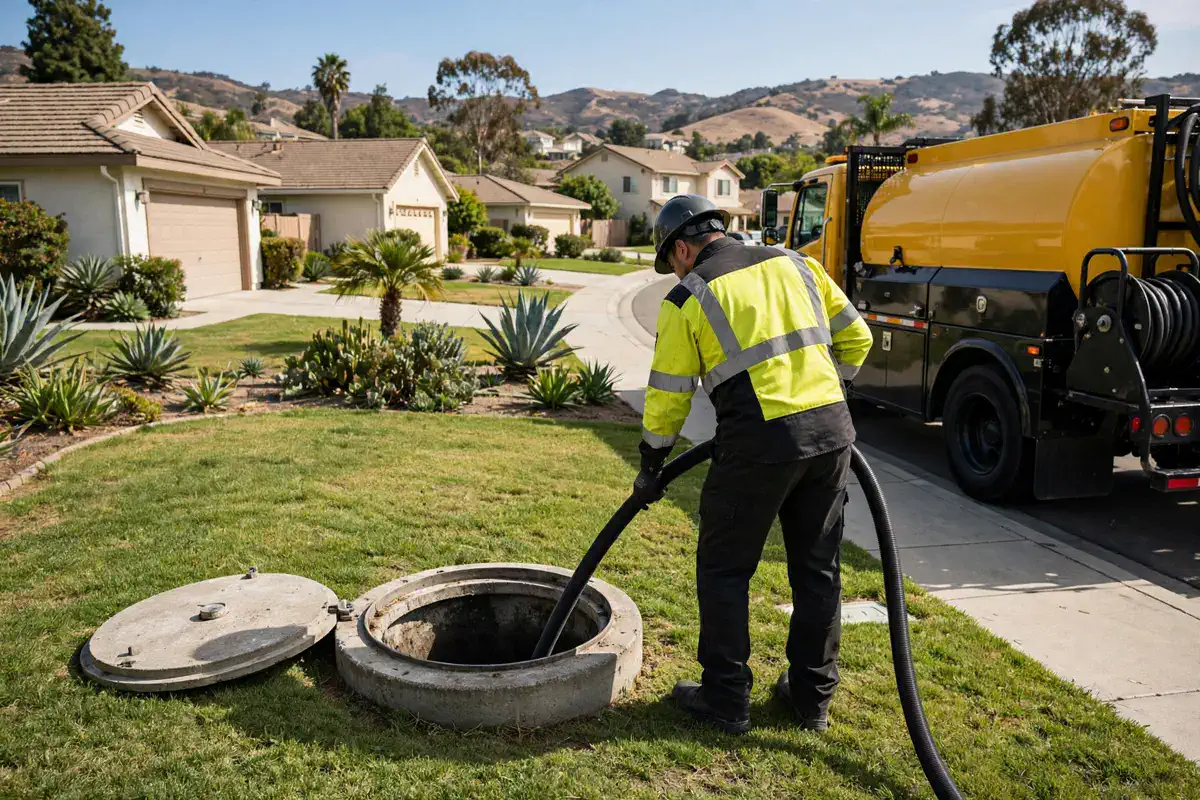
Santa Paula's citrus groves, older farmhouses, and river-valley homes run on septic systems that have served for generations. Busy Bee pumps, inspects, and repairs them — from East Santa Paula to the Ojai Road corridor — day or night.
Request a Free Estimate
Get a fast response for your Septic Tank Pumping in Santa Paula
Why Santa Paula Calls Busy Bee for Septic Pumping
Santa Paula is a working agricultural town, and its septic systems are working systems: older tanks on grove properties, family homes along Santa Paula Creek, and businesses on the Highway 126 corridor. We treat them like the infrastructure they are.
Short Drive from Camarillo
Highway 126 runs straight from Camarillo into Santa Paula. Our trucks reach East and West Santa Paula, the Ojai Road corridor, and the grove properties fast — same-day service is the norm.
Every Tank Size, Every System
From small 750-gallon tanks on older homes to large tanks on grove and multi-family properties, we pump and inspect them all — conventional gravity systems, Advantex units, and seepage systems alike.
Alarms, Odors & Emergencies
A red alarm light, a sewage smell in the yard, or a backup at midnight all get the same answer: a live voice and a truck. We diagnose the cause on site, not over the phone.
Open 24 Hours
Septic failures do not keep office hours. Our emergency line is staffed around the clock, and our trucks roll nights, weekends, and holidays across the Santa Clara River Valley.
Septic Tank Pumping in Santa Paula — Grove Properties, Older Tanks, Valley Know-How
Santa Paula sits in the Santa Clara River Valley, a town of citrus groves, packing houses, and family homes that predate most of Ventura County's suburbs. Many of the homes here — in East Santa Paula, West Santa Paula, and along the Ojai Road corridor — run on septic systems installed decades ago, when the town grew around the groves rather than the sewer lines. Those systems have served for generations, but only because someone kept pumping them. A tank that has not been pumped in years is not a working system; it is a backup waiting for a bad day.
Tank size is the first thing to understand about your system. A small home may have a 750-gallon tank, while larger homes and grove properties often run 1,000 gallons or more. The right size depends on the number of bedrooms and the people living in the home, and the county sets minimum sizes for new installations. A tank that is too small for the household fills fast, and a family that grows — or a home that adds a rental unit — can outgrow a tank that was fine ten years ago. When we pump, we measure sludge and scum levels and tell you whether your tank size still fits your household.
Most Santa Paula homes need pumping every 3 to 5 years, and a 1,000-gallon tank serving a family of four sits right in the middle of that range. Larger households, heavy laundry loads, and garbage disposals shorten the interval. Grove properties with worker housing or multi-family use should pump more often. The cost of a pump-out depends on a few clear factors: tank size, how easy the tank is to reach, and the condition of the system. A tank with buried lids that must be dug up takes longer, and a tank that has gone too long between pump-outs may need extra cleaning. Installing risers during the visit makes every future pump-out faster.
Odor is the complaint we hear most from Santa Paula homeowners, and it usually has a simple cause. A full tank pushes gases back through the drains, a dry trap lets sewer gas into the house, and a failing vent lets odors hang over the yard. Additives and chemicals sold for odor control do not fix any of these — they mask the smell while the tank keeps filling. The real fix is a pump-out, a check of the baffles and effluent filter, and a look at the vent stack. If the smell is coming from the yard over the leach field, the field itself may be saturated, and that needs an inspection, not a bottle of additive.
Many Santa Paula systems have an alarm panel, and a red light on that panel means something has stopped working. On a pump system, the red light usually means the effluent pump has failed, a float switch is stuck, or the tank is overfull and the pump cannot keep up. On an Advantex treatment unit, it means the treatment process has stopped. A red light is not a suggestion to wait until morning — it means wastewater is not moving where it should, and the tank will back up. If the alarm sounds, stop running water, check whether the pump is running, and call us. We carry replacement pumps and floats and can usually get the system running again on the same visit.
Sewage ejector pumps are another common piece of Santa Paula equipment. Homes where a bathroom, laundry, or kitchen sits below the level of the septic tank need an ejector pump to lift wastewater up to the tank. When the ejector fails, the lowest fixtures back up first — usually a basement or ground-floor bathroom. We service and replace ejector pumps, and we check the basin, the float, and the check valve so the same failure does not repeat.
When a septic tank overflows, the damage moves fast. Wastewater surfacing in the yard can reach the Santa Paula Creek drainage within hours in a heavy rain, and a backup inside the home contaminates floors, walls, and anything it touches. The first hours decide how bad the cleanup gets: stop all water use, keep people and pets away from the affected area, and call for a pump-out right away. Homeowners insurance sometimes covers septic failures, but coverage varies widely — some policies cover sudden backups and the resulting water damage, while others exclude septic systems entirely. Check your policy before you need it, and keep our inspection reports and pump-out records, because an insurer will ask for maintenance history when a claim is filed.
Santa Paula's commercial side needs septic care too. Packing houses, restaurants, and markets along Highway 126 run grease traps that keep fats and oils out of the septic system, and the county's storm drain rules mean grease has no business anywhere near a drain. A grease trap that is never pumped sends grease straight into the tank, where it coats the leach field and shuts it down. We service grease traps on a recurring schedule, and we pump the tanks of the businesses that depend on them.
Getting to Santa Paula from our Camarillo base is a straight run east on Highway 126, past the groves and the river. That puts us in East Santa Paula, West Santa Paula, and the Santa Paula Creek area in about the time it takes to cross town — which is why same-day service is the norm here, and why a midnight emergency gets a truck instead of a callback in the morning.
If you are buying a home in Santa Paula, have the septic system inspected before you close. Many of the town's systems are older than the buyers looking at them, and a system that looks fine on the surface can hide a full tank, a cracked baffle, or a failing leach field. An inspection with a full pump-out gives you a written picture of the tank, the baffles, the filter, and the disposal field — and a clean report gives the seller something solid to hand over.
- Slow drains or gurgling toilets in several fixtures at once
- Sewage odors inside the home or over the yard and leach field
- A red alarm light on the septic panel
- Standing water, soggy ground, or bright green grass over the disposal area
- Toilets backing up after laundry, showers, or heavy water use
- A tank that has not been pumped in 3 to 5 years
Waiting vs. Pumping on Schedule in Santa Paula
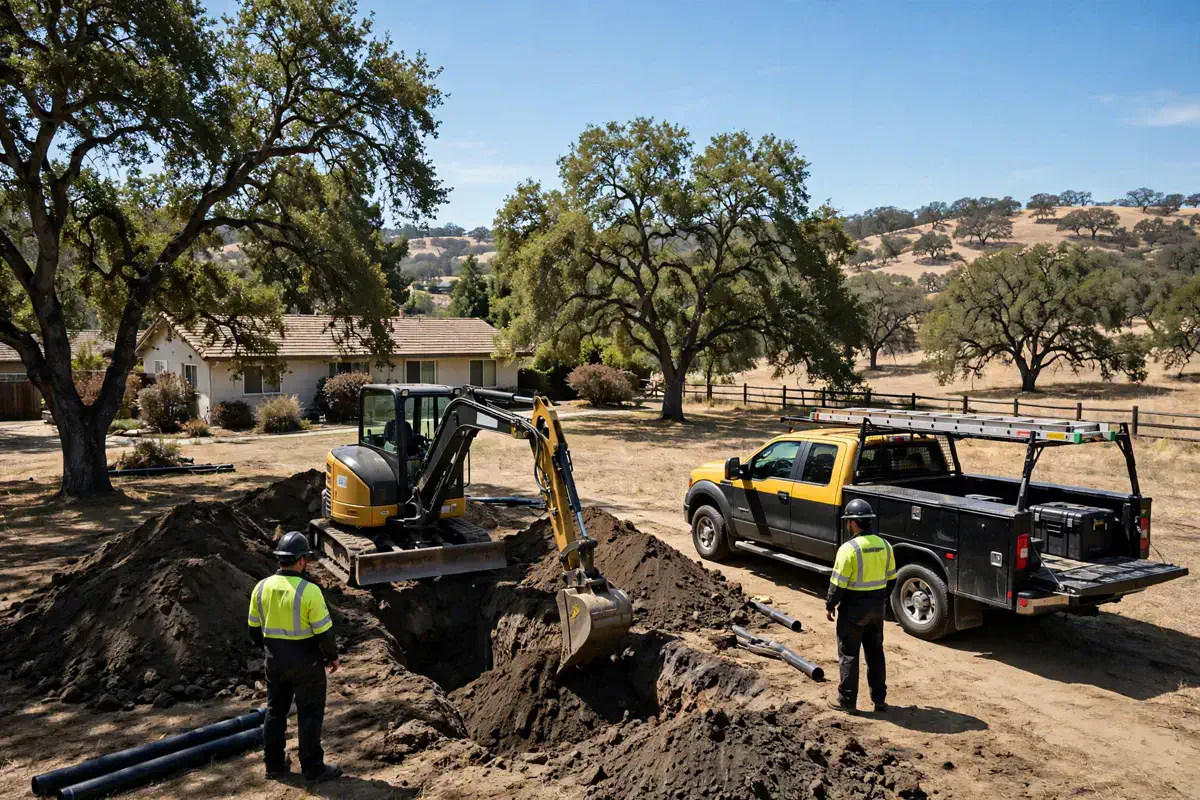
Santa Paula's older tanks and grove properties do not forgive neglect. Here is what waiting costs — and what a scheduled visit delivers.
| Service Aspect | Waiting or DIY | Busy Bee Septic |
|---|---|---|
| What gets removed | Liquid only, with sludge left behind to flow into the leach field | ✓ Complete emptying — all sludge and scum removed, tank washed down |
| Odor & alarm problems | Additives and guesswork while the tank keeps filling | ✓ Pump-out, baffle and filter check, vent inspection, and alarm diagnosis on site |
| Tank size guidance | No answer to whether the tank still fits the household | ✓ Sludge and scum measured, tank size checked against the household, risers offered |
| Commercial & grease traps | No grease trap service — grease goes straight into the tank and field | ✓ Recurring grease trap service for restaurants, markets, and packing houses |
| Emergency response | Voicemail after hours during a backup or overflow | ✓ Live answer 24 hours a day, with trucks rolling nights, weekends, and holidays |
How Septic Tank Pumping Works in Santa Paula
From the first call to a clean, inspected tank — four steps, no guesswork.
Call or Request a Quote
Call (805) 307-3409 or request a free quote online. Tell us where you are — East Santa Paula, West Santa Paula, the Santa Paula Creek area, the Ojai Road corridor, or a grove property — and when the tank was last pumped.
We Locate & Open the Tank
Our crew finds the tank and its lids, even on older grove properties where the records are long gone. Buried lids get dug out, and we can install risers so the next visit takes minutes instead of hours.
Full Pump-Out & System Check
We empty all sludge and scum, measure the levels, inspect the baffles, effluent filter, pump, and alarm, and look over the leach field or seepage area for signs of trouble. Ejector pumps and grease traps are checked on the same visit when present.
Report & Next Pump-Out Date
You get a clear report on the condition of your system and a recommended date for the next pump-out, so the 3-to-5-year cycle never slips — and small problems get caught before they become replacements.
Need Septic Tank Pumping in Santa Paula?
Do not let a full tank turn into a backup, a red alarm, or a flooded yard. Call Busy Bee Septic Tank Pumping at (805) 307-3409 or request a free quote — 24 hours a day, across Santa Paula and the Santa Clara River Valley.
Request Free QuoteFrequently Asked Questions
Find answers about septic tank pumping and septic service in Santa Paula, CA.
What is the average cost of pumping out a septic tank in Santa Paula? +
How often does a 1000 gallon septic tank need to be pumped? +
What does baking soda do to a septic tank? +
Can a septic tank go 20 years without being pumped? +
What does the red light on my septic alarm mean? +
What toilet paper is safe for a septic tank? +
Serving the Santa Paula Community
Our Santa Paula Service Areas
We provide septic tank pumping, cleaning, inspection, and repair across the following neighborhoods in Santa Paula: